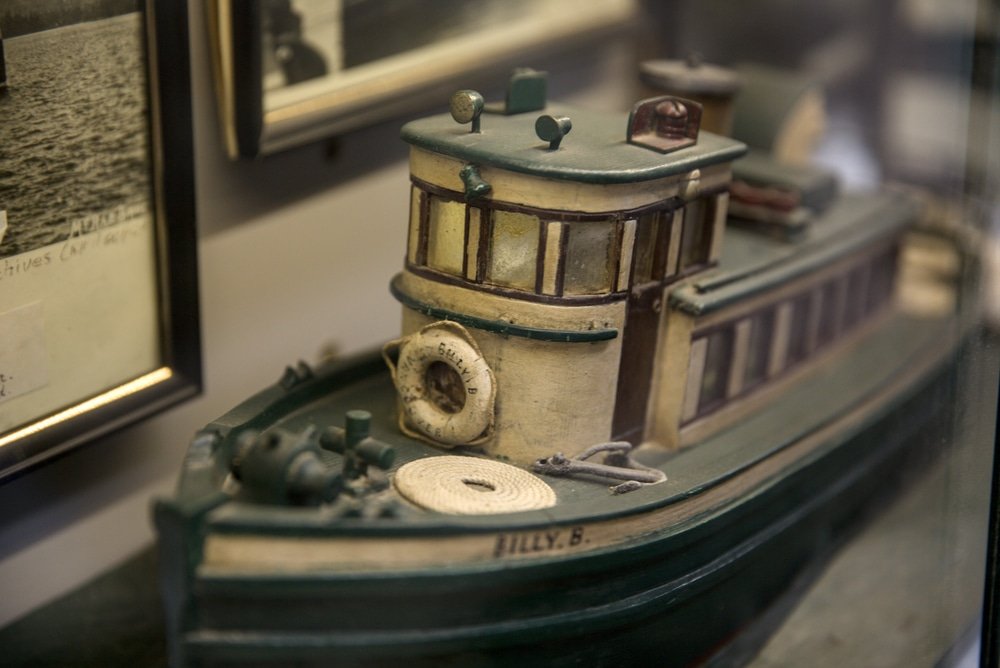
In the modest homes of Denman Island, far from the battlefields of two world wars, life continued with a steady, determined rhythm. This cabinet gathers the objects that tell that story—tokens of sacrifice carried home, everyday endurance on the home front, and the small, sustaining joys that kept spirits alive.
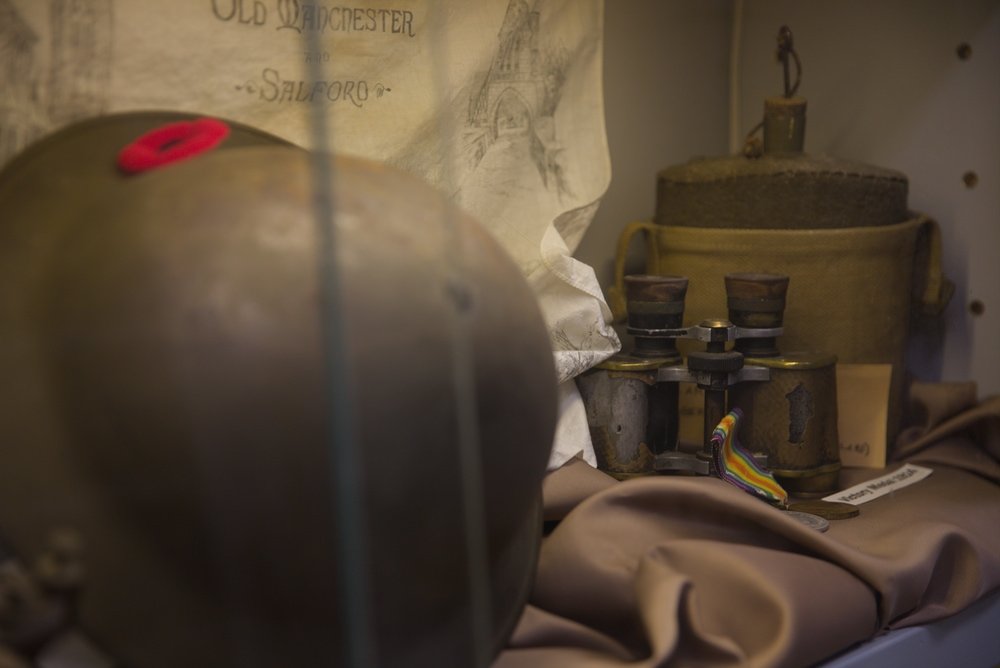
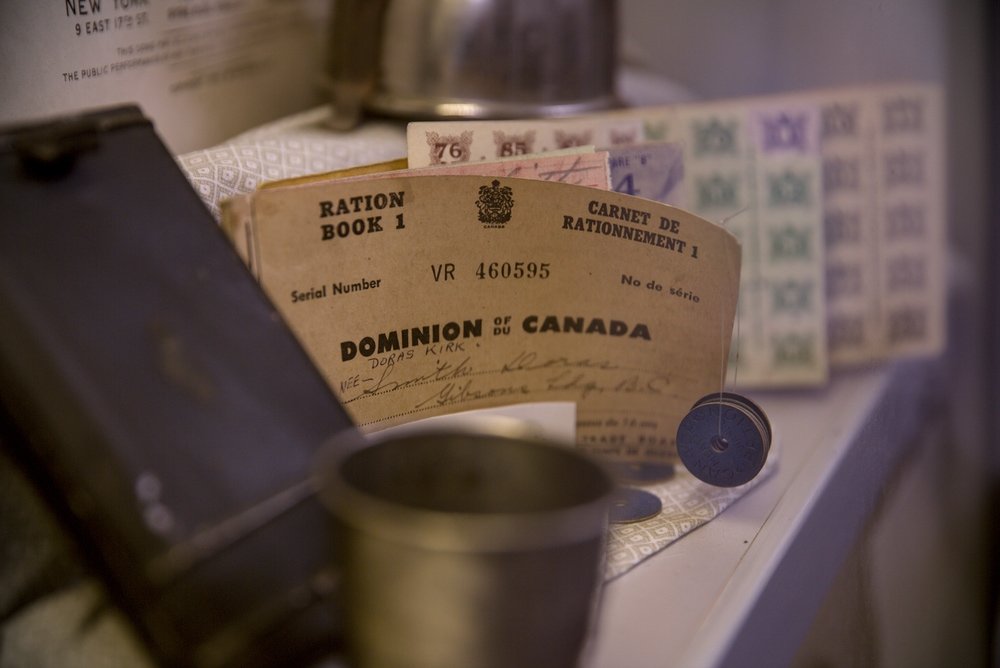
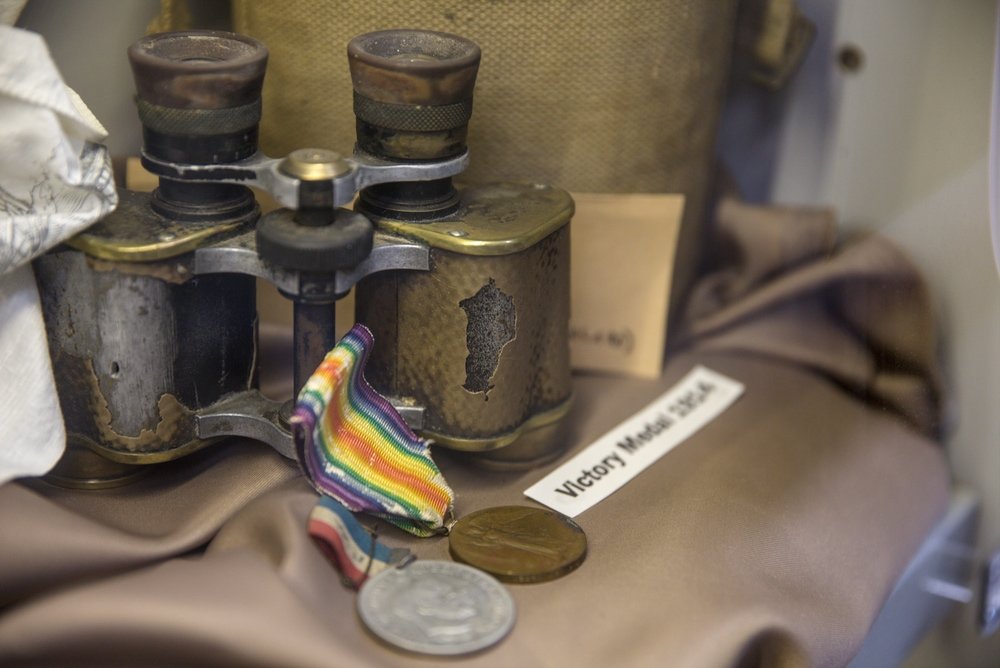
At the centre stands the legacy of Dr. George Percy, the island’s pioneer physician. His memoir, This Doctor’s Journey, rests beside a framed portrait, a deep blue glass carboy, a delicate porcelain sickroom cup, and the first-aid manual that guided his hands through countless nights of care. These items speak of a man who tended to his community while the world beyond trembled.
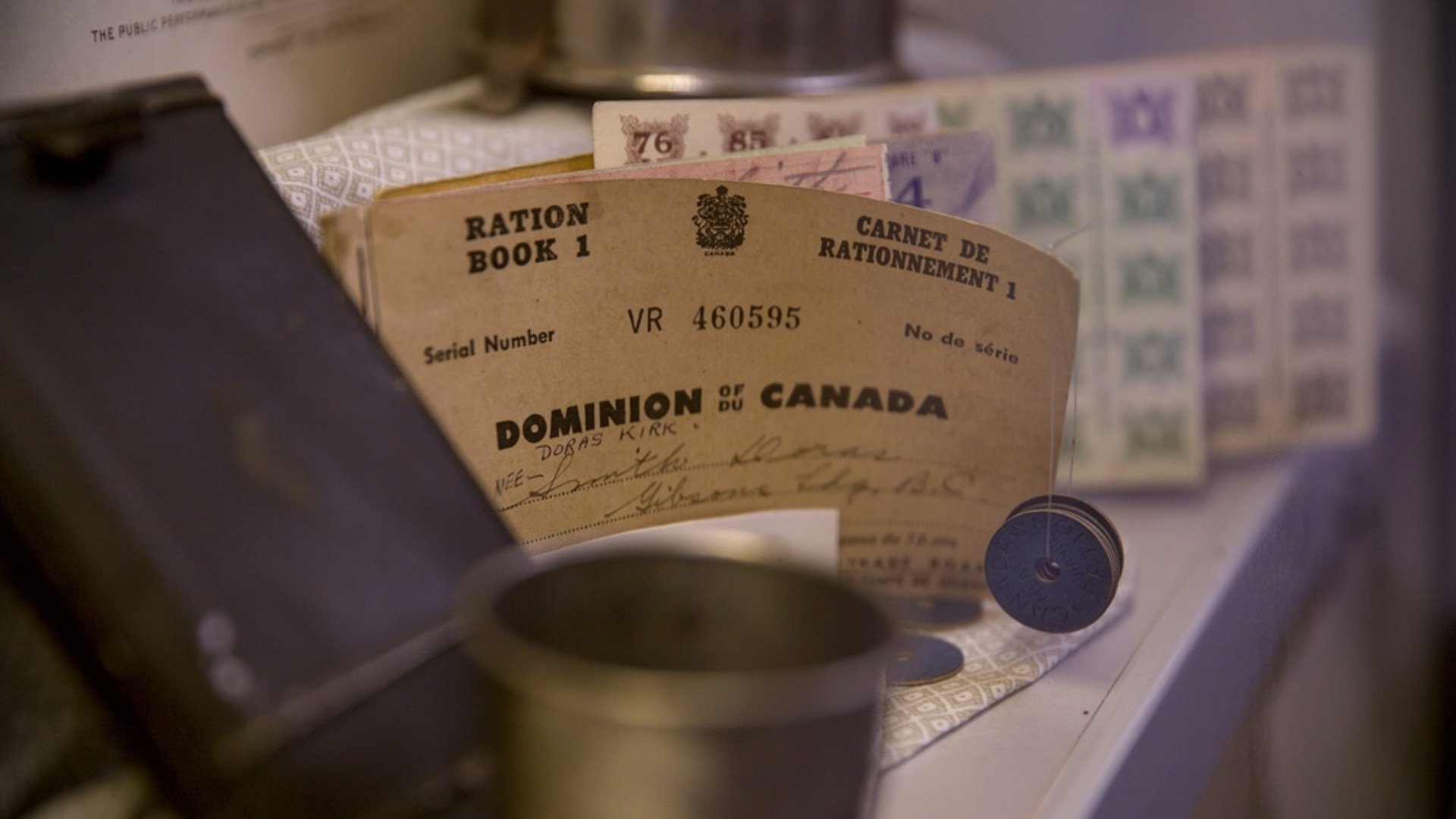
Nearby lie the quiet marks of civilian life under strain: a ration book bearing the careful handwriting of Doras Kirk, a WWII air-raid warden’s gas mask, a tin mug, and the sheet music for The Veterans’ Song (“Long Live the King”)—reminders of coupons counted, nights spent listening for sirens, and songs sung to hold fast to hope.
Frontline echoes arrive in more personal form: an aged WWI British Brodie helmet, field binoculars, a Morse code key, trench-art shell casings fashioned from spent brass, a Victory Medal 1914, and a single red poppy pinned to cloth—each one carried back across the ocean, holding the weight of distant battles and the men who fought them.
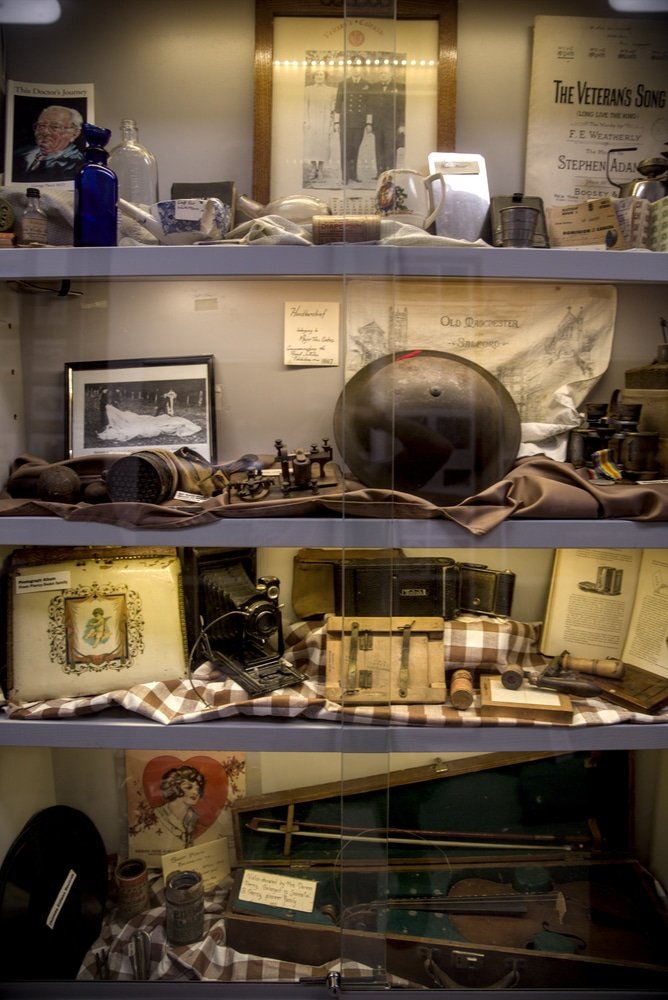
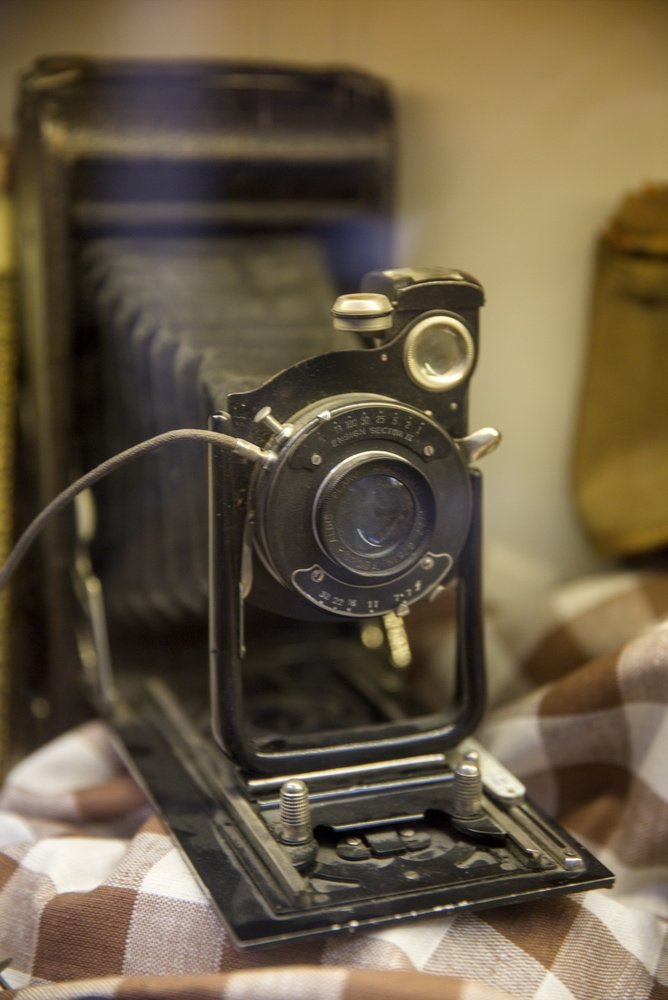
Yet the lower shelves turn to something enduring. A Kodak folding camera and the weathered photograph album of the Pierce-Swan family capture the first snapshots of island life in an era when every image was precious. Stacks of Thomas Edison phonograph records, a piece of sheet music inscribed with affection, and a violin once played by pioneer James W. B. Perry (preserved in its green-lined case) speak of evenings when music filled the house—notes that rose above the news from abroad, reminding families they were still here, still together.
These objects, gathered with care, do not shout of war. Instead, they whisper of resilience: how islanders rationed, tended, remembered, and created beauty even when the world felt dark. In their worn handles, faded ink, and silent strings lies the gentle truth that courage was not only on the battlefield—it lived quietly at home, in every small act that kept life going.