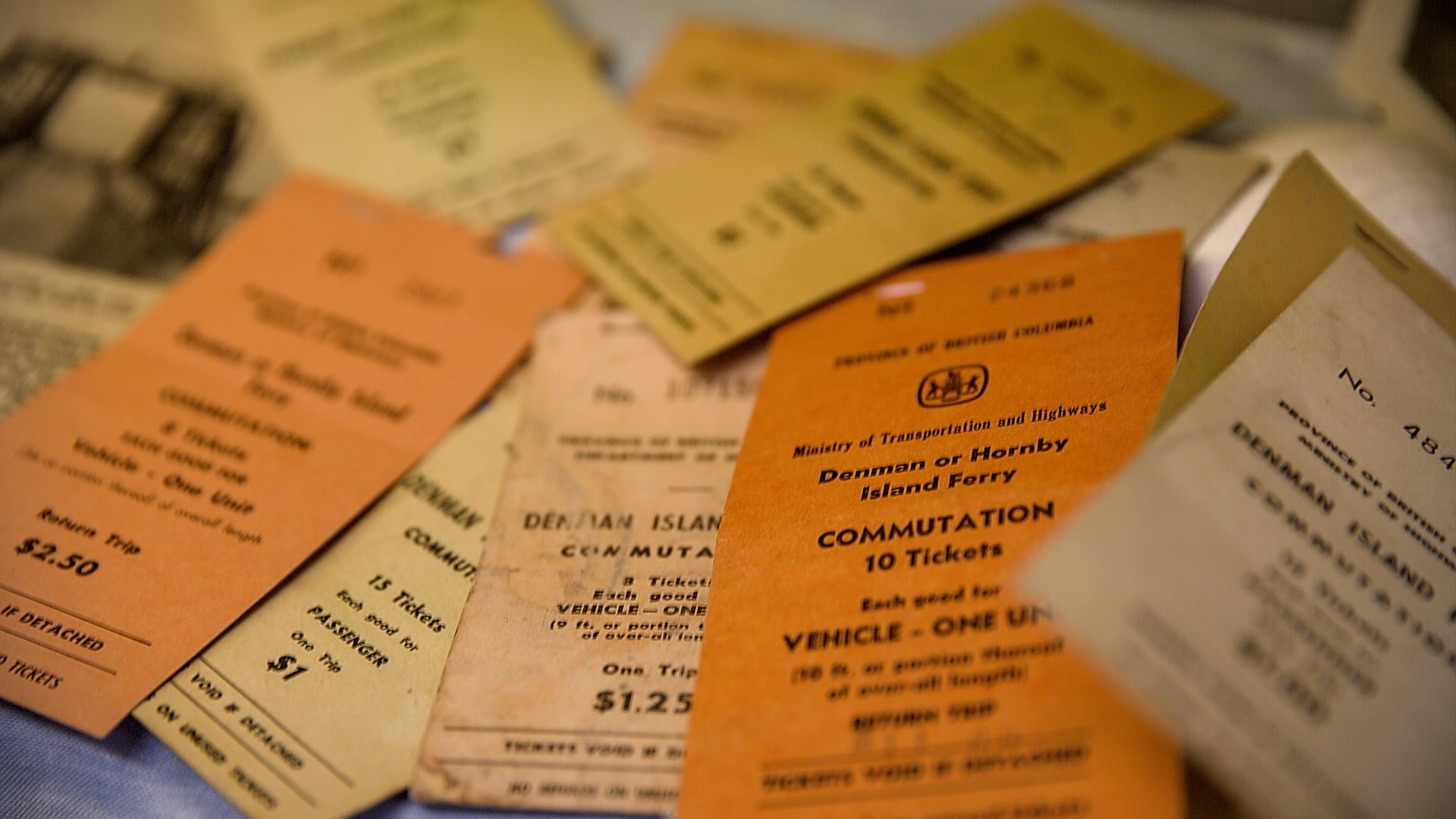
This evocative maritime transportation display at the Denman Island Museum & Archives captures the island’s vital connection to the outside world through the golden age of coastal steamships and early ferry services.
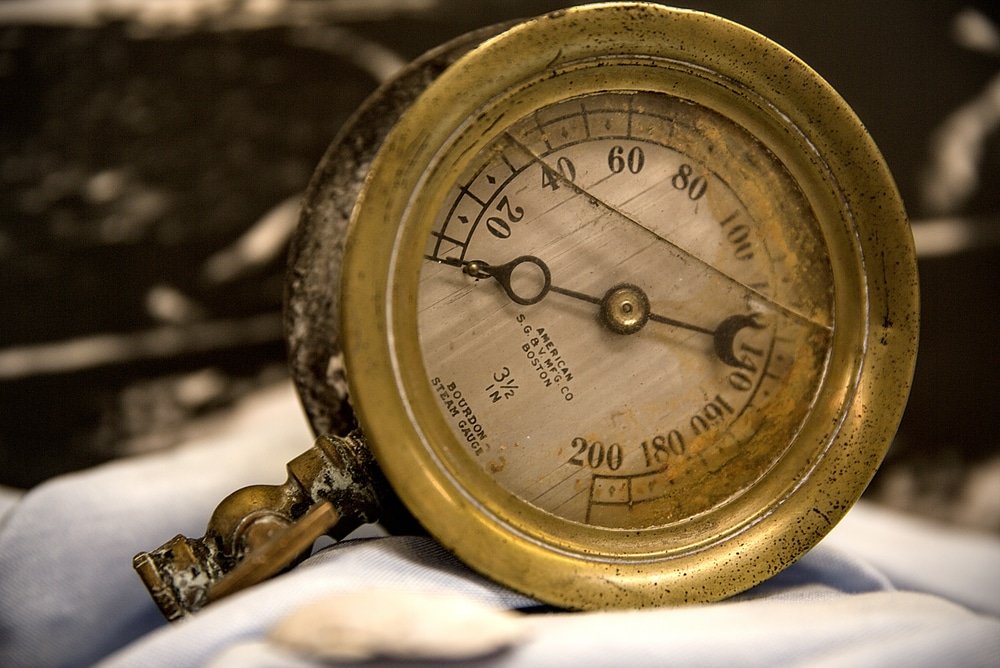
Dominating the upper shelf are nautical essentials: a polished brass searchlight or signal lamp, a classic kerosene lantern with sturdy blackened metal and bail handle, a barometer for reading the fickle Gulf Islands weather, and a small ship’s wheel or helm component—symbols of the skill and vigilance required to navigate Baynes Sound’s tides and fogs.
Behind them, large sepia photographs and framed images chronicle the era’s passenger steamers, including the elegant Princess Mary (a Canadian Pacific Railway coastal liner that called at Denman as part of routes linking Vancouver, Comox, and the islands) and other Union Steamship Company vessels such as the Charmer. These ships—part of the “Princess fleet” and Union lines—carried mail, freight, settlers, and visitors from the late 1800s through the mid-20th century, often stopping at Denman’s early docks before dedicated ferries existed.
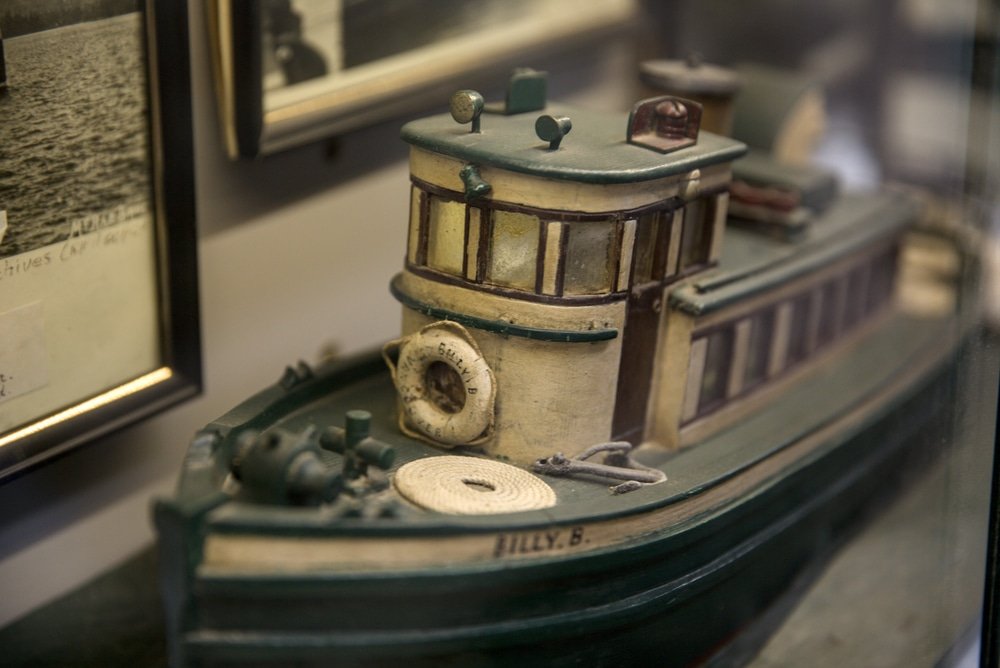
A standout model of the “Billy B”, the hardworking tug-and-scow ferry that served from the 1940s, sits proudly amid shells and salvaged hardware—evoking the transition from private tug services (such as Alby Graham’s “Rex” in the 1920s–1930s) to government-subsidized runs.
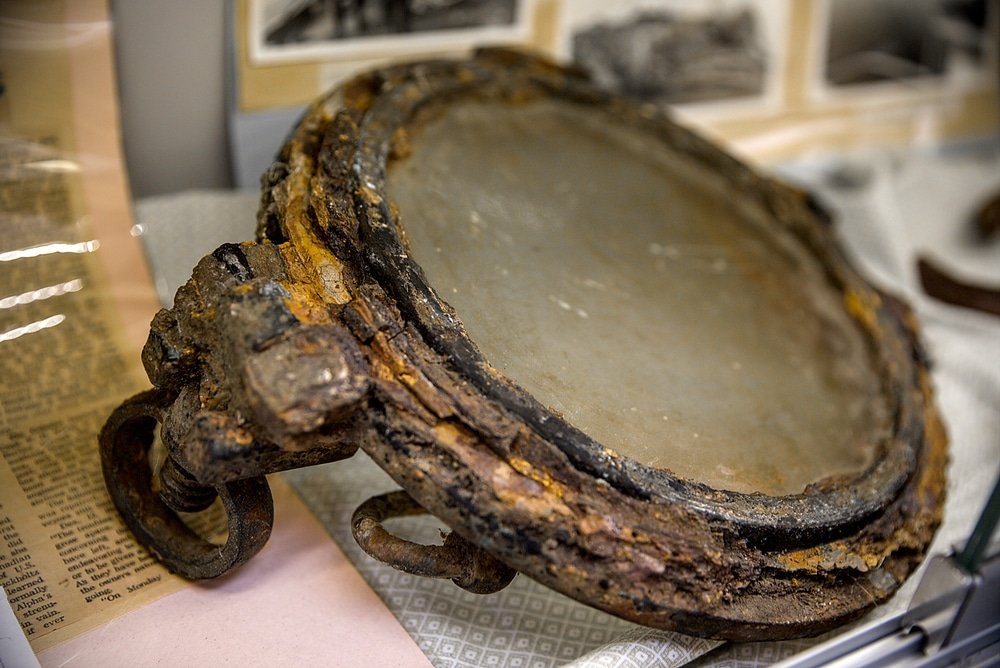
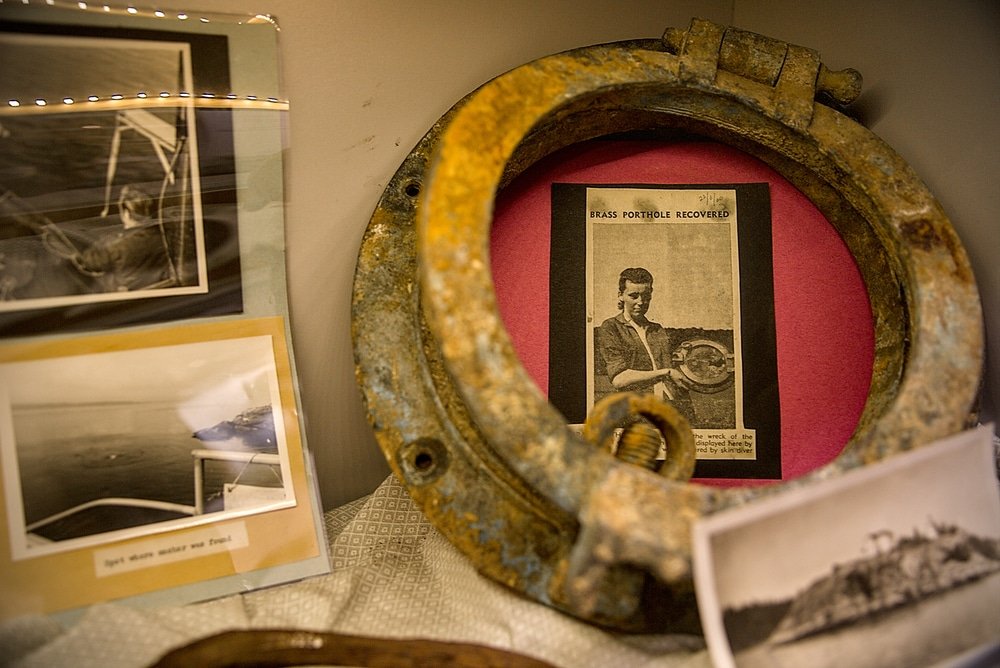
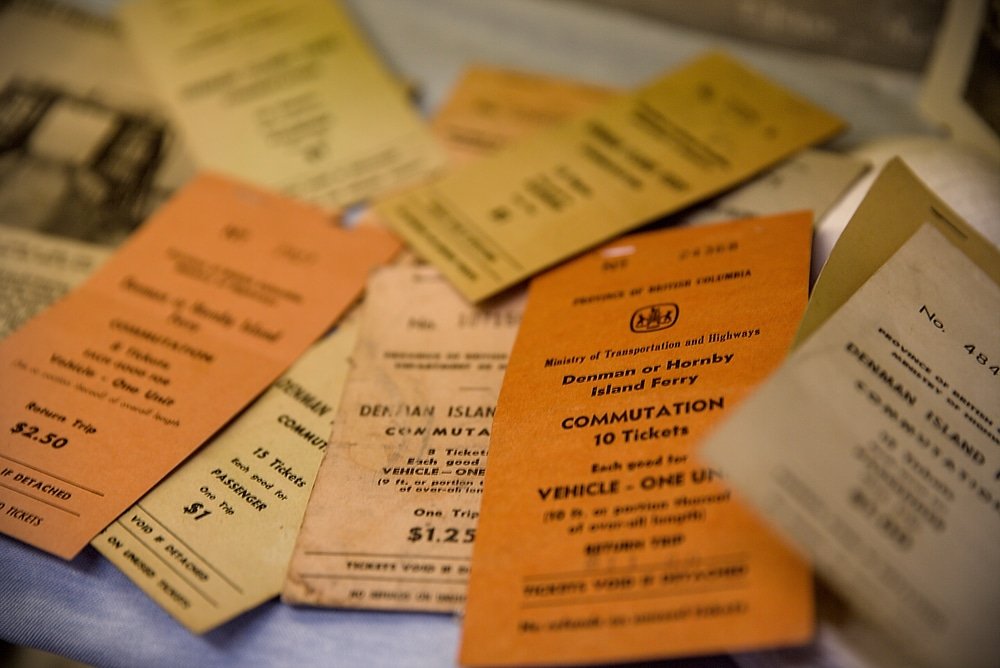
Lower shelves feature group portraits from the inauguration of regular ferry service (circa 1914–1930s, celebrated at Native Sons Hall in Courtenay), newspaper clippings of historic crossings, and relics including a salvaged anchor and porthole from the wreck of the steamship Alpha.
*The Alpha, on its way to take a load of coal from Union bay to Japan, met its end on December 15, 1900, when severe southeast gales drove it onto the rocks of Chrome Island (then known as Yellow Rock) at the entrance to Baynes Sound. The vessel was overwhelmed by the storm’s fury; despite efforts to seek shelter, it grounded, broke apart, and sank with significant loss. Artifacts from the wreck, recovered over time, serve as a somber reminder of the perils faced by mariners in these waters and the risks inherent in connecting remote communities.
A formal tribute to the steamers and ferries that transformed a remote island into a connected community—where each whistle stop delivered news, supplies, and new faces—while acknowledging the dangers that accompanied progress and the enduring legacy of those who navigated these treacherous channels.