In the early days on Denman Island, the kitchen was more than a room—it was the steady pulse of family life. Before electric stoves and supermarkets, every meal began with patient hands and time-tested tools, each one carrying its own quiet history.
Imagine the soft thud of a hand-carved butter stamp from 1912 pressing a pattern into fresh butter, while papers and a wooden paddle stood ready to wrap the blocks for the table or the market. Nearby rested Norah Fuller’s butter churn, its crank turned with the same steady rhythm that greeted many island mornings, transforming cream into golden stores for the week ahead.
Glass bottles caught the light on the shelf: Jersey Farm quarts and pints for milk, a Coke bottle for a rare treat, a 1912 Silver Spring Brewery beer bottle, and a marble-stopper soda from 1890—small reminders that even in a world of homemade fare, a sip of something store-bought could feel like a celebration.
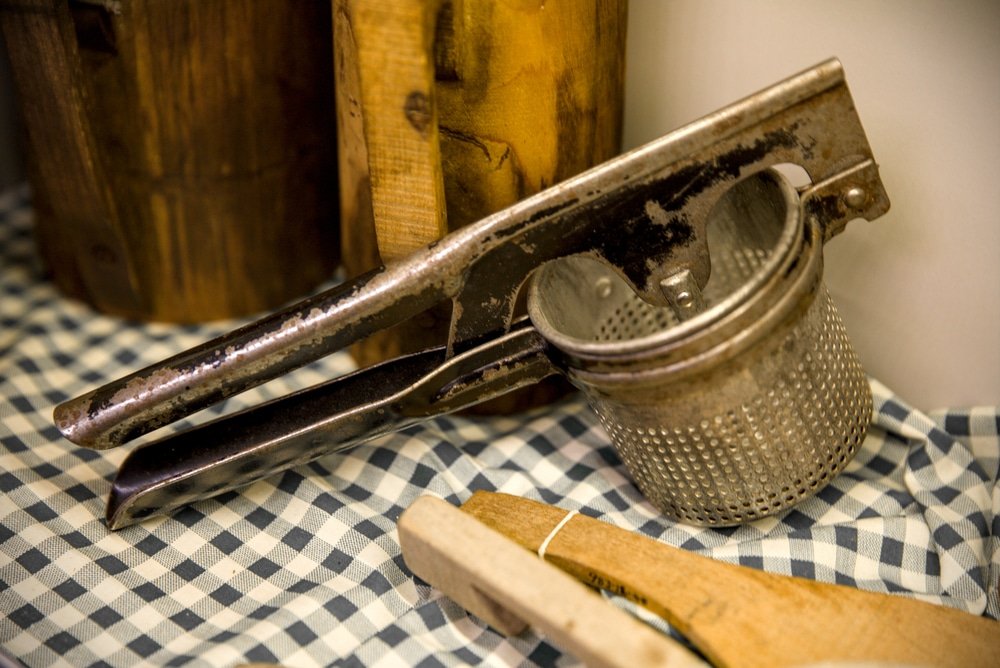
A brass coffee grinder waited with its wooden drawer, promising the comforting scent of freshly ground beans to start the day. An enamel teapot and percolator stood beside it, while wooden measures, a potato ricer, and a meat saw from Ernie Pickles’ farm spoke of the care taken to prepare simple, hearty meals from what the land and sea provided.
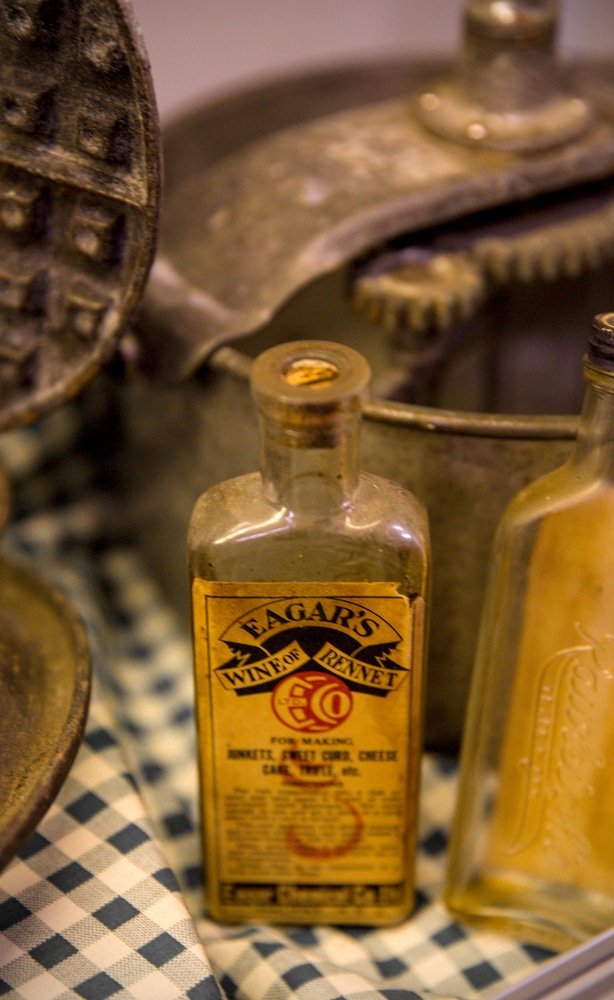
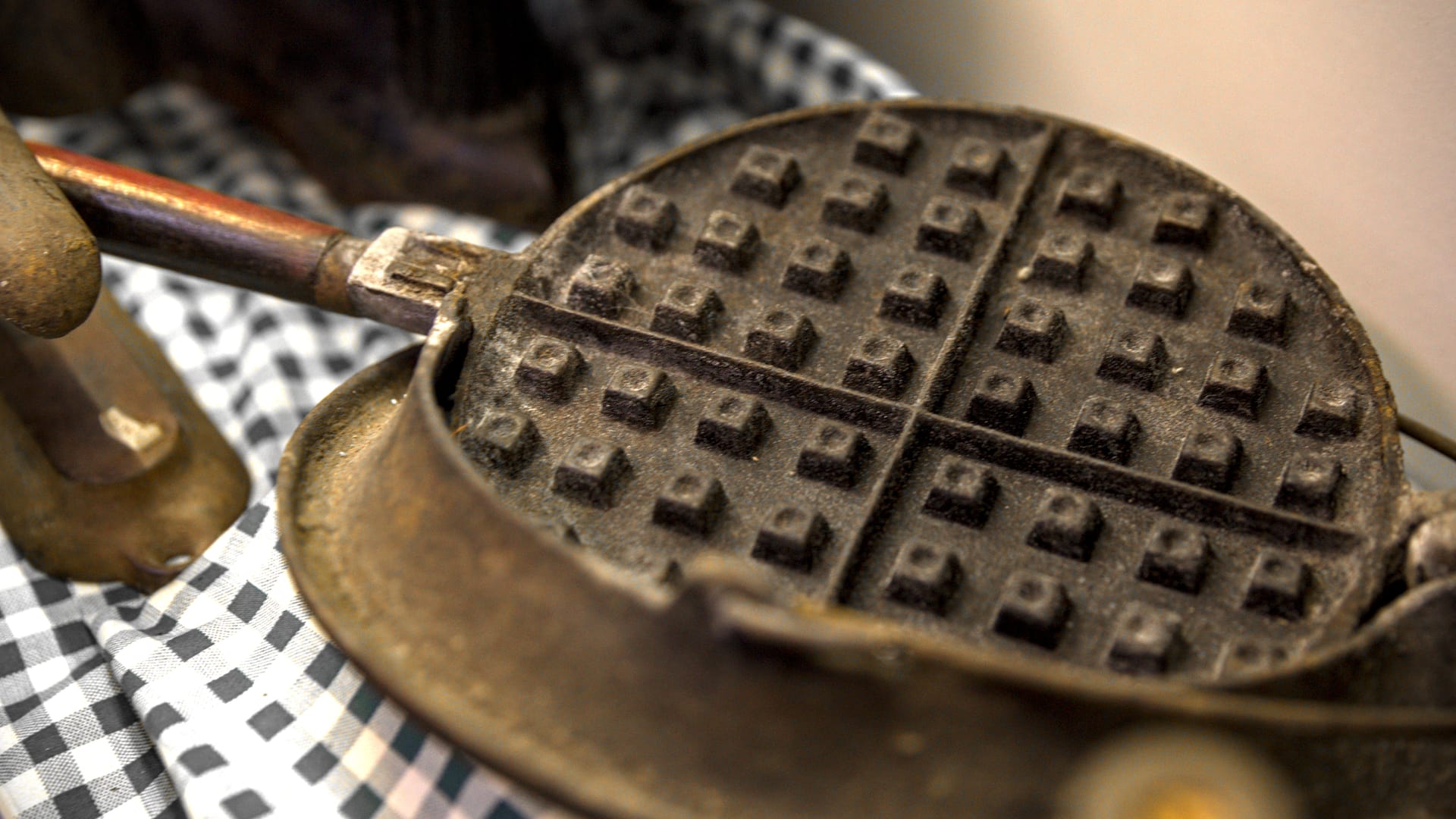
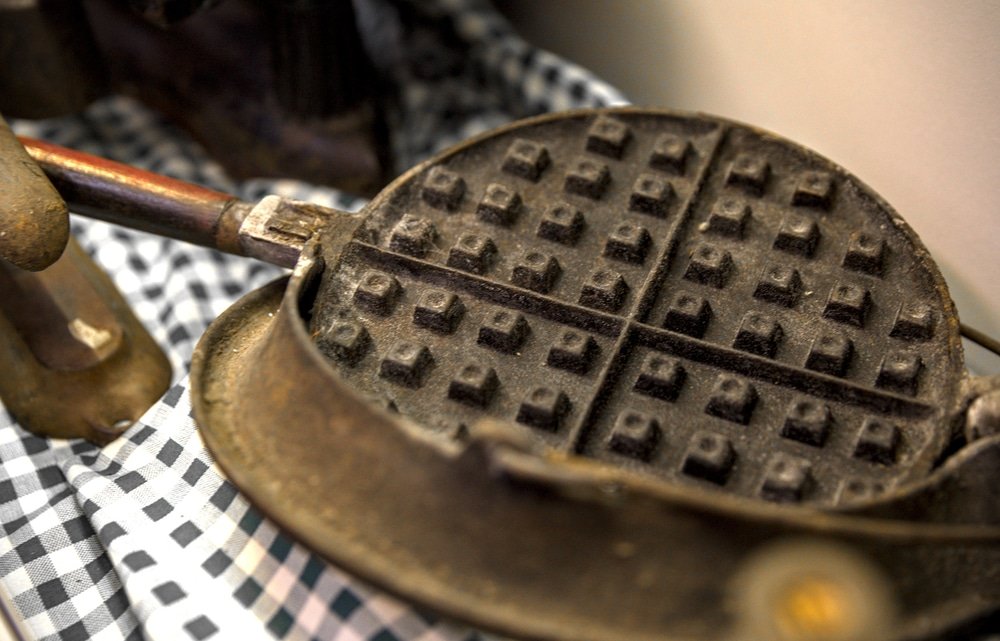
Smaller treasures told their own stories: a fruit crimper, a home-made meat cleaver, scales from 1904, a waffle iron with its long handle, wine of rennet for making curd, and a cake mixer—each chosen for its reliability, each bearing the marks of hands that worked with patience and skill.
These utensils, donated by islanders such as Mrs. David Pickles and Maude McGee, preserve the rhythm of a time when life moved at the pace of a hand-crank and the warmth of a wood stove. They remind us that even the most ordinary objects can carry the memory of generations who turned daily labour into shared comfort and continuity.