In the quiet parlours and sunlit kitchens of early Denman Island, women wove not only cloth but also the fabric of community life. This display honours their patient skill, gathering the tools and creations that clothed families, adorned homes, and preserved traditions across generations.
At the heart stands the J. & A. McFarlane Glasgow floor loom (No. 63), its sturdy wooden frame and taut warp threads still whispering of long hours spent passing the shuttle, turning raw fibre into linen, woollen blankets, or sturdy work shirts. Nearby, a Singer Natural Rotary sewing machine, its black iron base and gold filigree gleaming, marks the moment when foot-powered mechanics quickened the pace of dressmaking and mending.
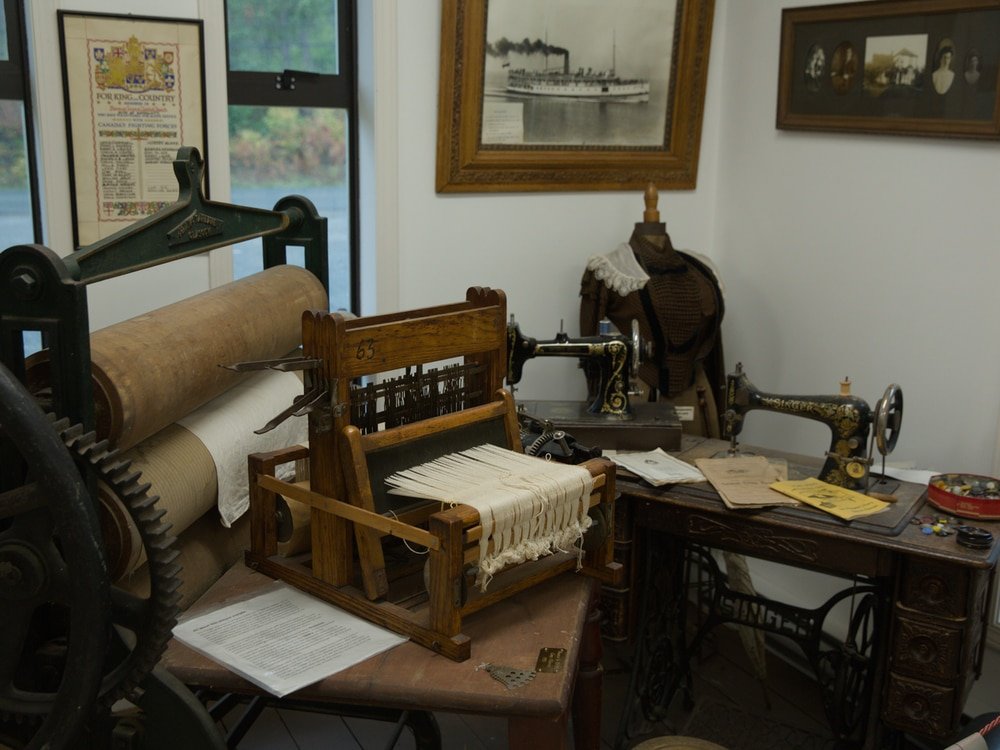
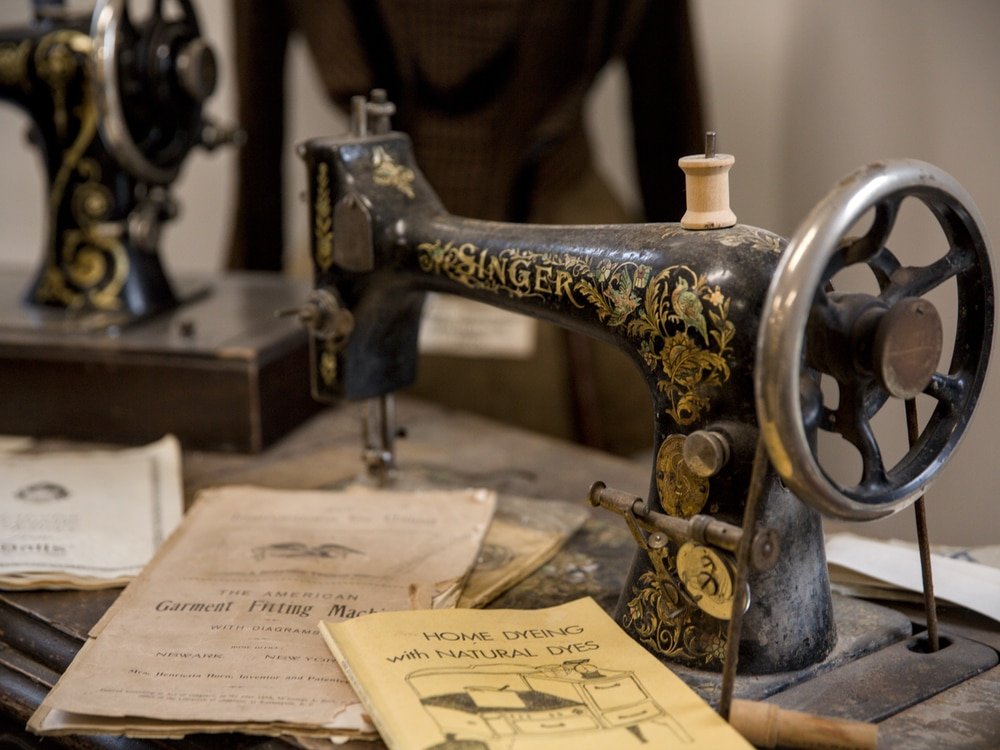
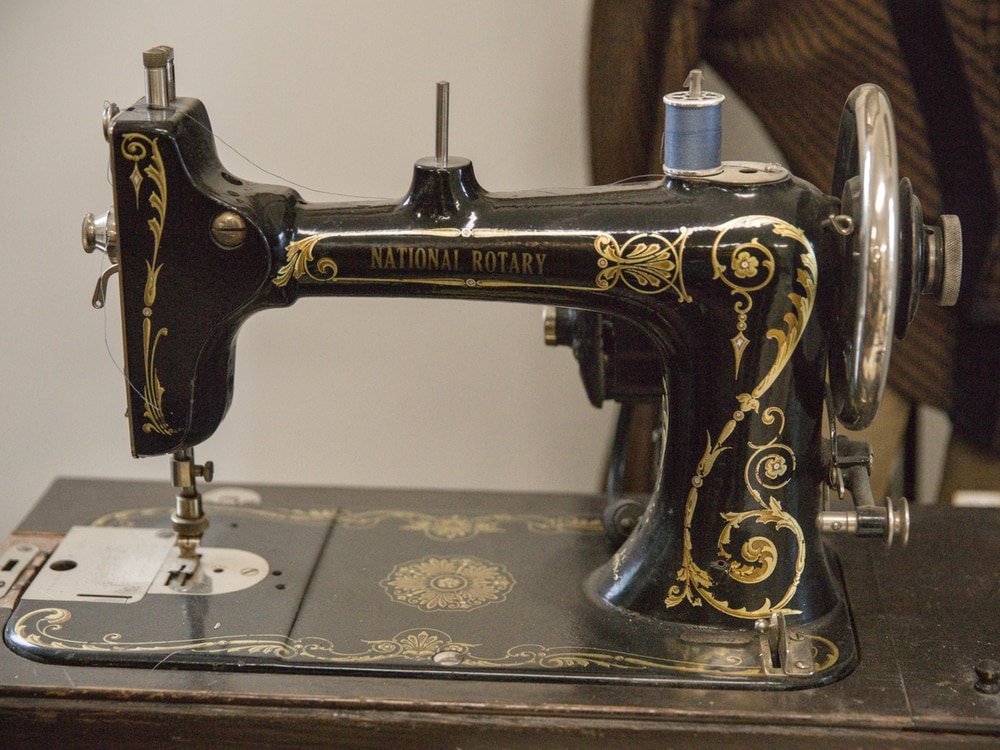
A mannequin wears a carefully preserved gown of natural-dyed fabric, its lace trim and fitted seams a testament to the artistry of island needlewomen. Beside it lie pattern books, dye instructions (Home Dyeing with Natural Dyes by Margaret S. Furry), and a tin brimming with buttons—each one a small choice that shaped a garment’s character.
A bobbin lace pillow, ringed with individually named bobbins from the Denman and District Lace Club (founded 1919), rests with framed membership certificates and a tiny doll dressed in delicate handmade lace—tokens of the club’s dedication to preserving this intricate craft. A spinning wheel, its wheel still smooth from use, completes the circle: from fleece to thread to finished cloth, every step carried forward by hand and heart.
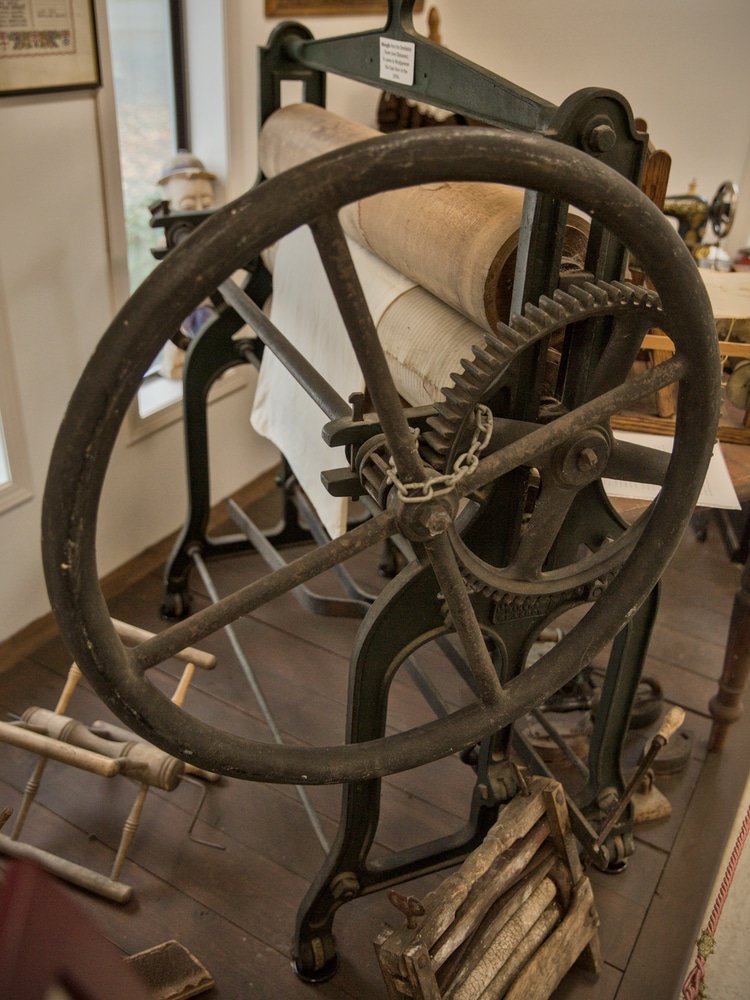
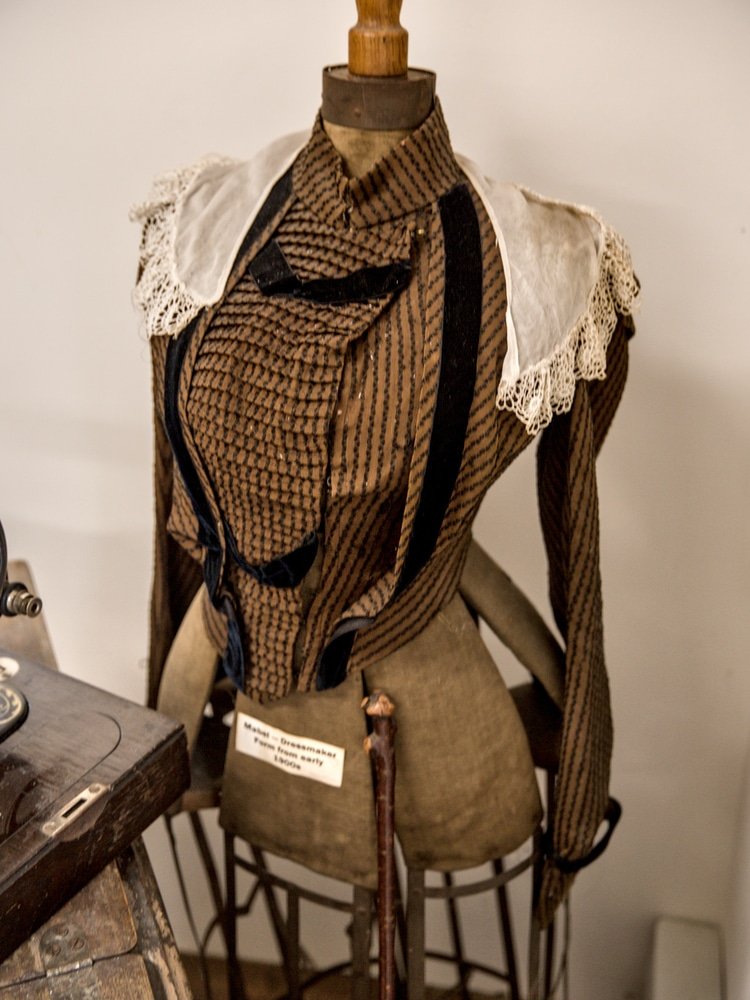
These treasures, many bearing the names of local families, tell a gentle story of endurance and creativity. They remind us that on Denman Island, textiles were more than fabric—they were warmth, identity, and quiet pride, woven one careful thread at a time.