Long before settlers arrived, the waters and forests of Denman Island—known to the Pentlatch as Punchlatt and to the K’ómoks as Sla-dai-aich or Taystayic—were home to thriving Coast Salish communities. This pair of displays honours that enduring presence, weaving together ancient craftsmanship and living traditions of the K’ómoks (Comox) First Nation, whose unceded territory has always encompassed these shores and the Salish Sea beyond.
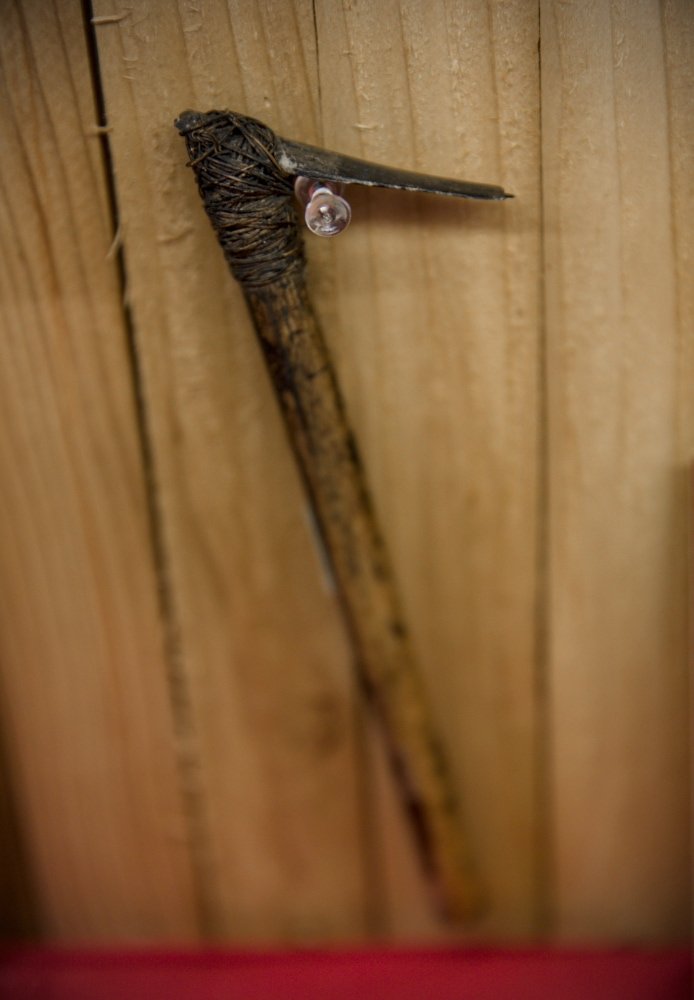
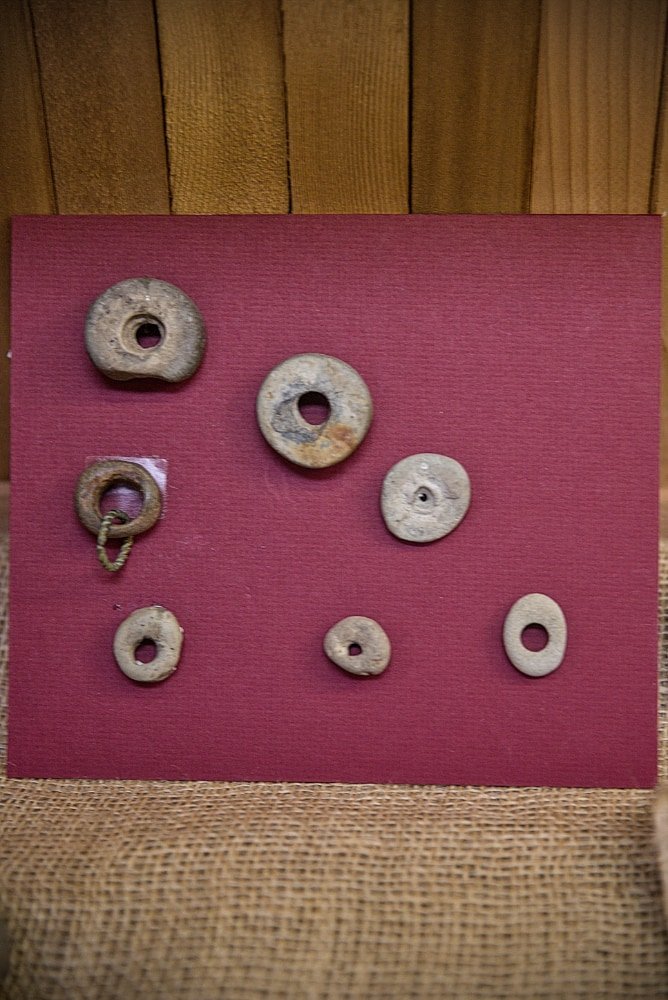
In the first case rest stone tools gathered over generations, many from the private collection of Doras Kirk. Here lie finely knapped projectile points, both arrowheads and spear tips, alongside net weights and anchors drilled with patient precision, ground stone pestles, mauls, and a deep mortar with its matching pestle. These objects speak of the Locarno Beach phase (circa 3500–2500 years before present) and the Marpole phase (circa 2500–1100 years before present)—times when Coast Salish ancestors deepened their relationship with the sea, refined their technologies, and built societies of growing complexity.
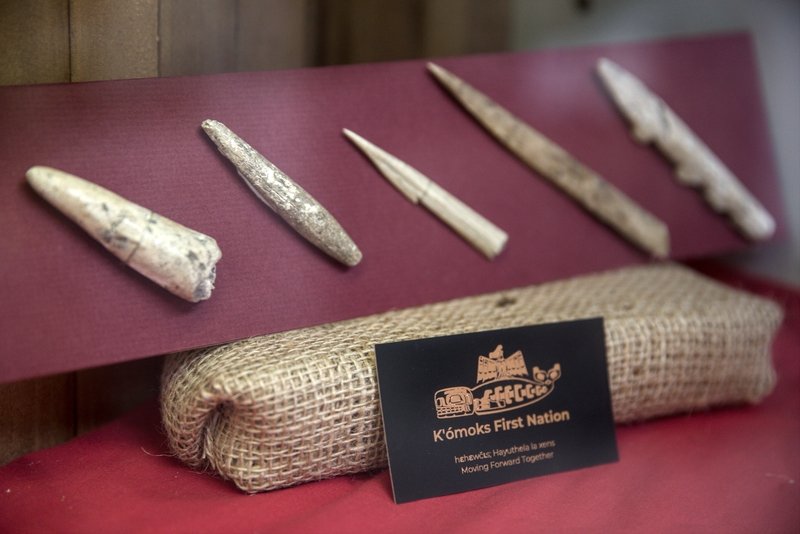
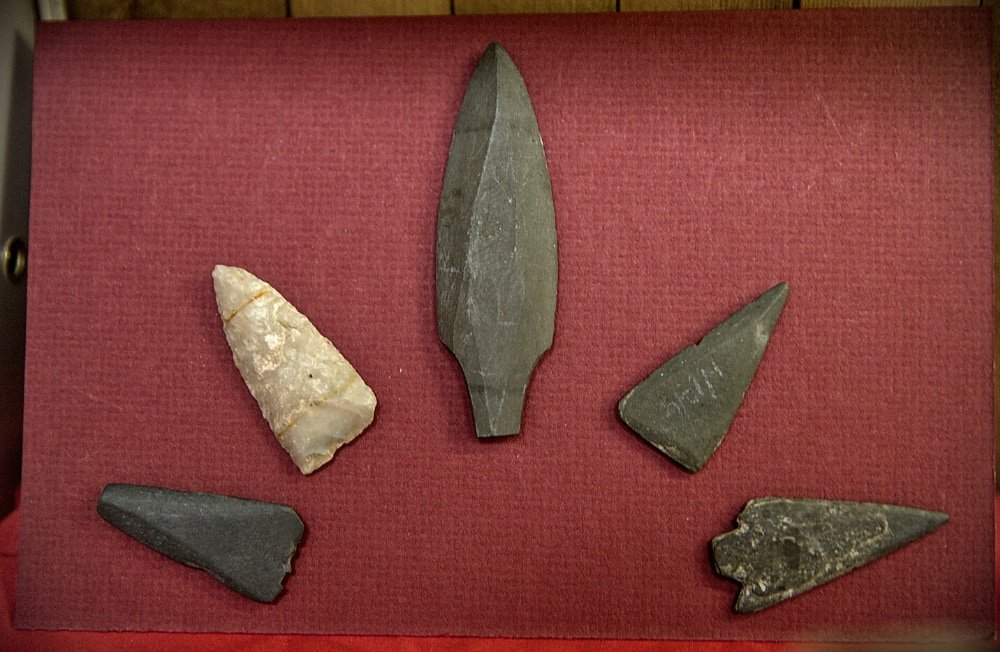
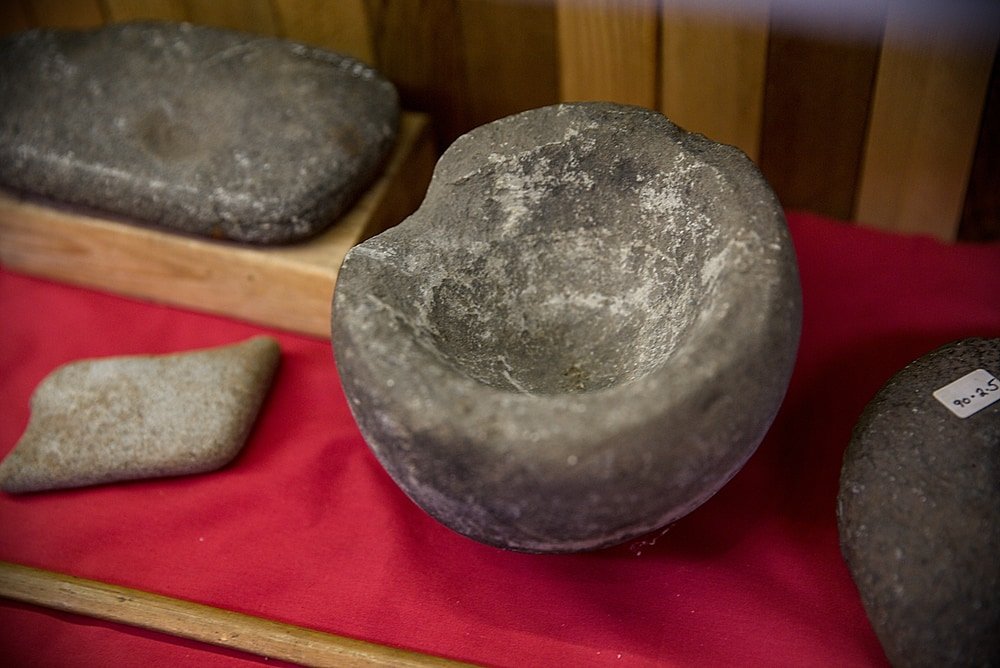
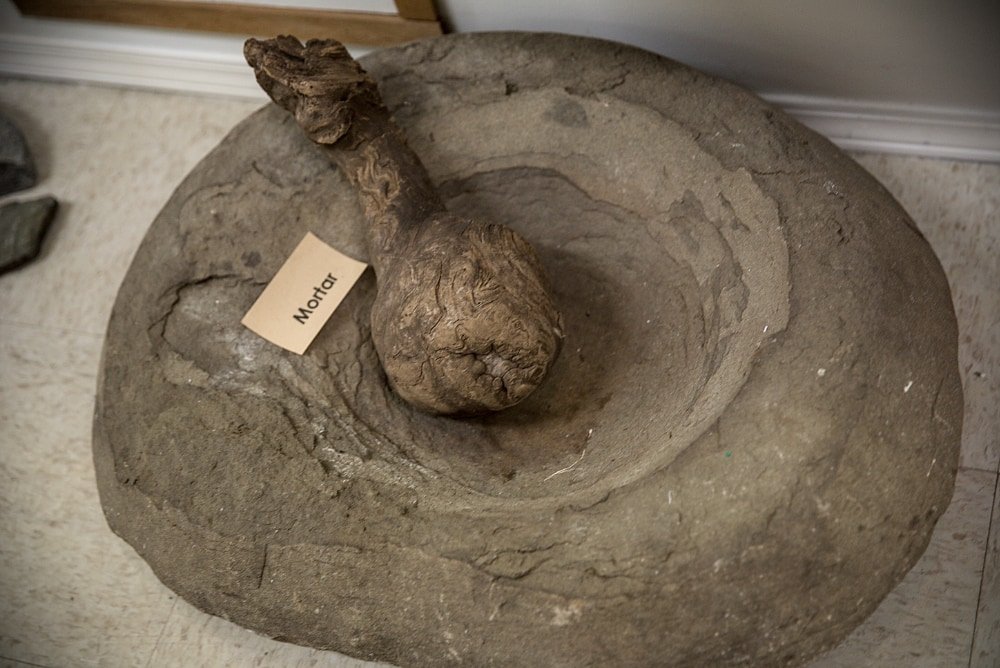
Nearby, photographs and panels reveal the petroglyphs of Chrome Island—once called Yellow Rock—etched into the sandstone just off Denman’s southern tip. These ancient carvings of human figures, animals, and abstract designs carry the Salish tradition of storytelling, spiritual practice, and deep connection to place, enduring reminders of a continuous presence in these waters.
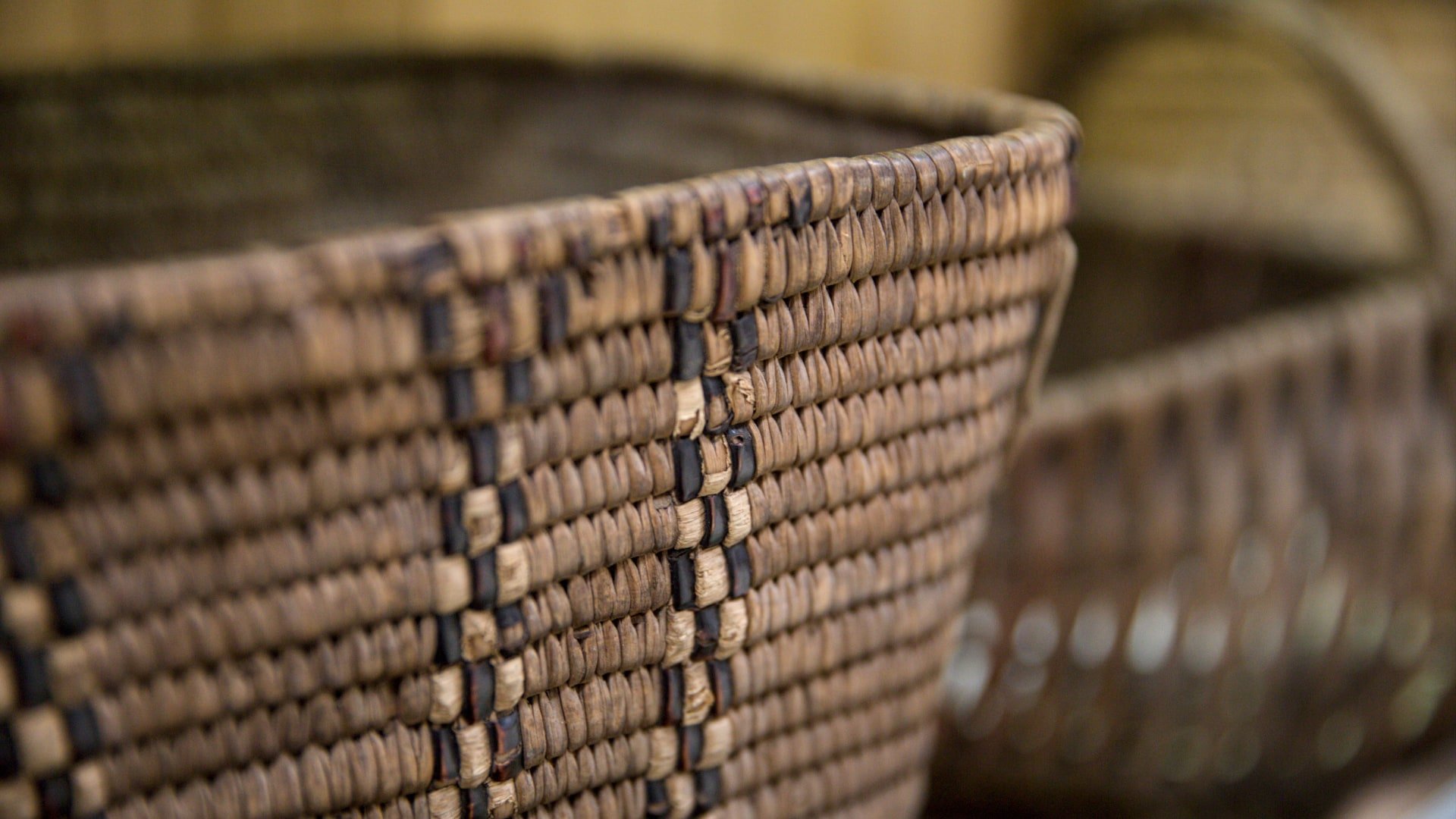
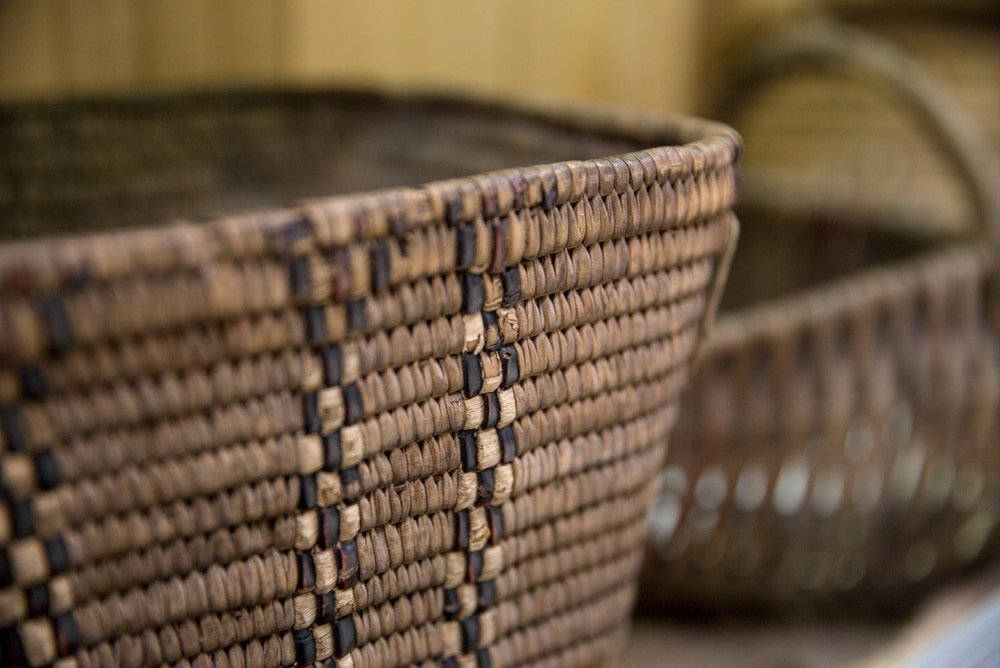
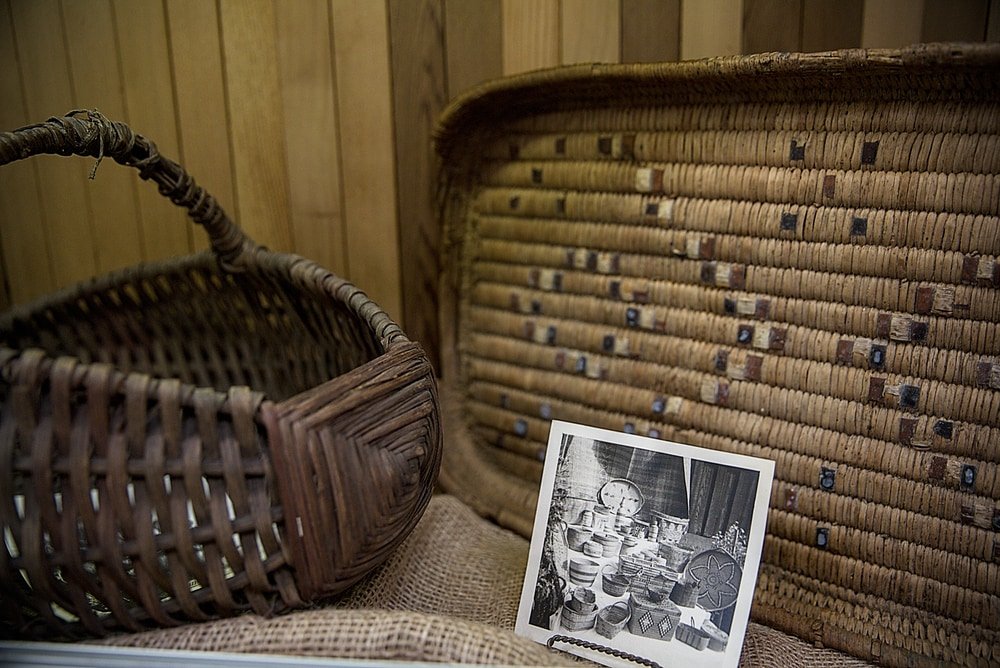
The second case carries the story forward. Miniature canoes and paddles, often made in the 20th century for trade or ceremony, rest beside woven cedar bark mats and baskets—each strand a testament to skilled hands working with the land’s gifts. Clay and wooden pipe bowls, zoomorphic bear bowls, whetstones, and abraders join a reference to the Guardian Watchmen totem poles, including one carved by K’ómoks artist Randy Frank and raised at Fillongley Provincial Park in 2018 to affirm unity, protection, and care for the territory.
A 1902 photograph of K’ómoks community members, alongside references to Hilary Stewart’s Artifacts of the Northwest Coast Indians, brings human warmth to these objects—faces and families who carried forward knowledge and resilience.
These displays are offered with respect, acknowledging that the story of this place is living and ongoing. They invite visitors to reflect on deep continuity: from the hands that shaped stone thousands of years ago to those that carve and protect the land today. For a fuller understanding, dialogue with K’ómoks community members remains essential.